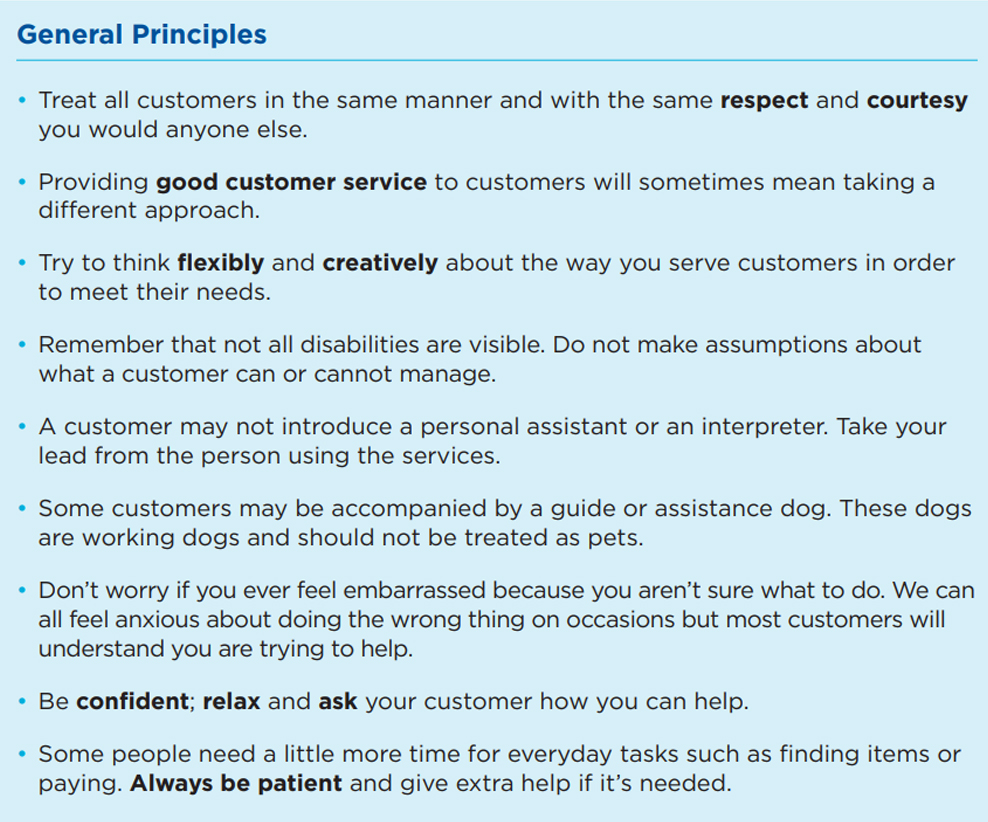
There are many small actions you can take to make your stores more accessible for everyone.
For example, clear, easy to read signs benefit every customer. A doorway or ramp that makes it easy for some elderly customers will also be useful for a parent with a pram or buggy.
Try to ensure that customers can access your services in the same way or as close as possible to the same way as customers who may need a little extra help.
If you are unable to provide a customer with exactly the same service, be prepared to offer them a reasonable alternative. This may mean providing the service by a different method.
Making adjustments in your store can benefit your customers and colleagues, ensuring that your store is accessible to everyone now and in the future.
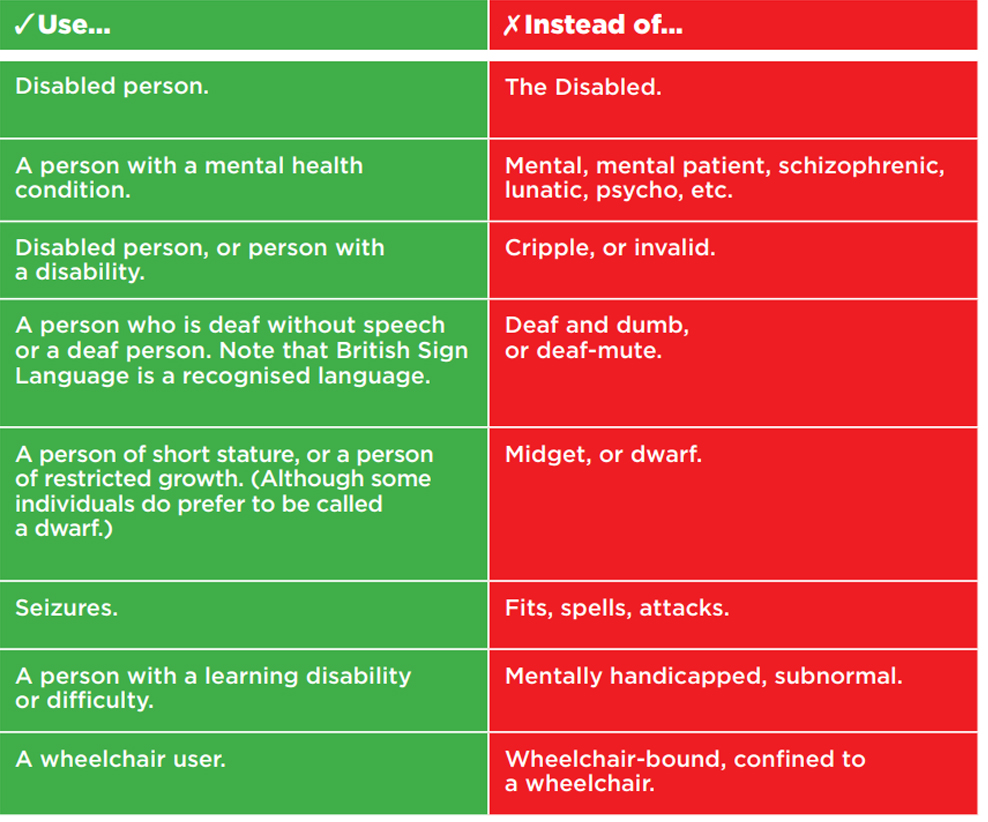
Certain words and phrases may cause offence, but preferences vary, so be prepared to ask the individual. Although there are no concrete rules about the “right” and “wrong” thing to say to people, increased importance is being put upon ensuring language does not reinforce negative stereotypes. If in doubt, ask yourself how you would want to be treated and always be willing to adapt to a person’s individual preference. Common sense and common courtesy will help you to know what to do and say. The one universal rule is never to assume you know what assistance, if any, a customer requires. Ask if, and what, assistance they need.
Here are some general tips on what to say and what not to say.